



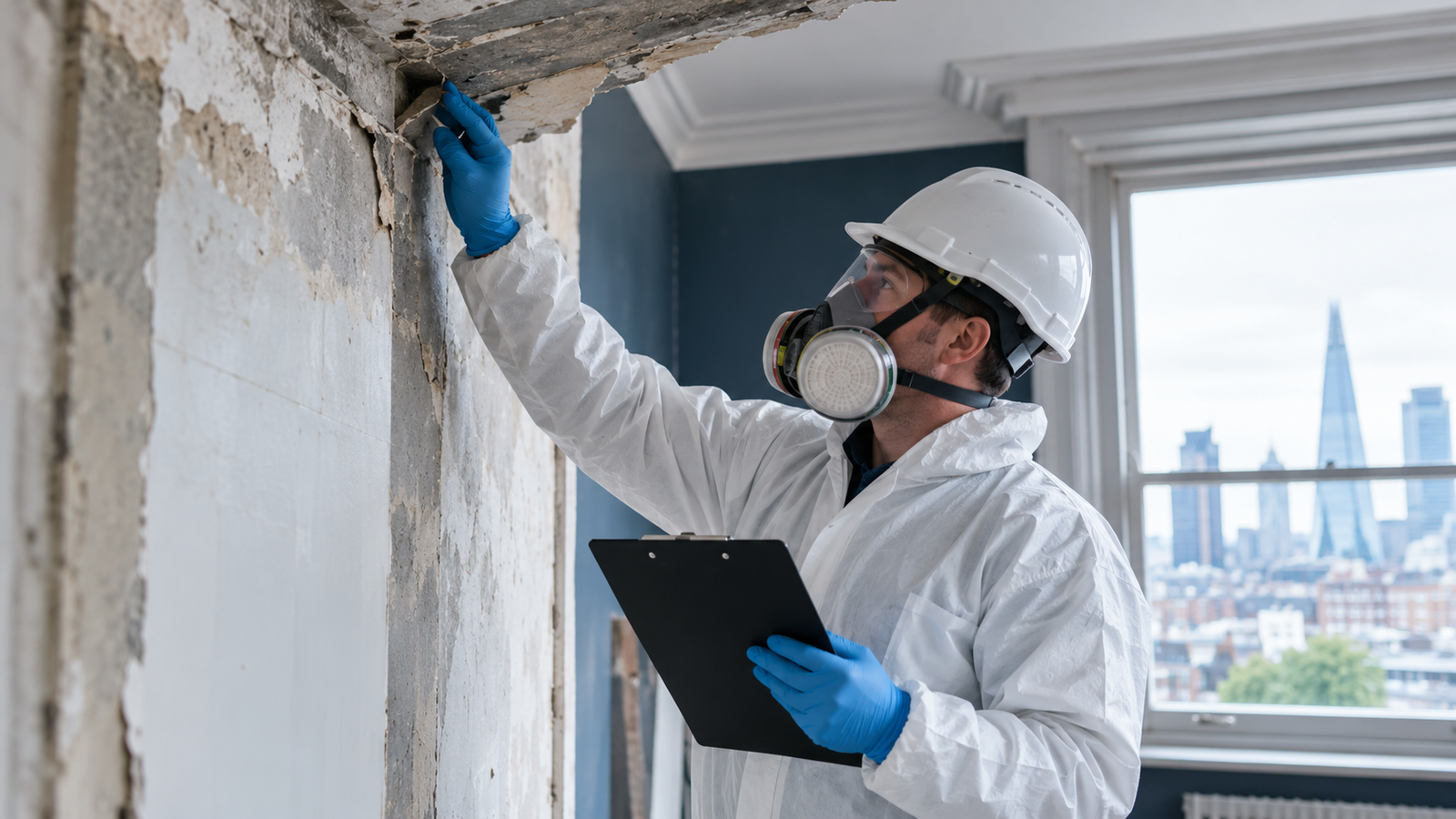
Which Asbestos Survey in London Do You Need Before Your London Project?
The type of asbestos survey you need before a London project based on the work you plan to carry out. A management survey is normally suitable for recognizing asbestos containing materials that could be disturbed during normal occupation and routine maintenance. If your project includes renovation or refurbishment, you will usually require a refurbishment survey covering the affected areas. A demolition is needed to examine the relevant parts of the building for demolition. An Asbestos Survey in London assessment helps property owners, landlords, developers and contractors identify potential asbestos risks before work begins, allowing them to plan the project safely and determine whether further investigation or action is necessary.
The survey type matters, an assessment designed to manage asbestos during normal building use may not recognize materials concealed within the areas influenced by refurbishment or demolition. The Health and Safety Executive (HSE) distinguishes between management surveys and refurbishment or demolition surveys for this reason. Property owners, landlords, facilities managers and developers should establish which survey is appropriate before contractors begin work, rather than discover gaps in the asbestos information after a project has started.
Which Type of Asbestos Survey Does Your Project Require?
The HSE recognises two main survey types: management surveys and refurbishment or demolition surveys. Each has a different purpose, and the right option depends on whether the building will remain in normal use or undergo work that could disturb its structure.
Management Survey for Existing Buildings
A management survey identifies asbestos-containing materials that could be disturbed during normal occupation, routine maintenance and everyday use. Its findings help the responsible person maintain an asbestos register and decide how identified materials should be managed.
This type of survey is relevant to offices, shops, residential communal areas and other premises where people work or live. For example, a facilities manager responsible for an older London office may need information about asbestos in service ducts, ceiling voids and accessible maintenance areas.
However, a management survey does not automatically cover every concealed material that contractors might encounter during major renovation. If the project involves removing walls, stripping ceilings or altering service routes, further investigation may be necessary.
Refurbishment Survey Before Renovation Work
A refurbishment survey investigates the parts of a building that will be affected by planned alterations. It is generally required before intrusive work where the existing asbestos information does not adequately cover the materials that may be disturbed.
Common examples include kitchen and bathroom renovations, ceiling replacement, flooring removal, electrical upgrades, commercial fit-outs and structural alterations.
Consider a landlord renovating an older London flat. The contractor plans to remove the ceiling, replace floor coverings and install new electrical wiring. An existing management survey may contain useful information, but it might not cover materials hidden behind the ceiling or beneath the flooring. A refurbishment survey can investigate these areas before the work begins.
As the inspection may include opening up building materials, the influenced area must be vacated during the survey. The evaluation should be carefully scoped around the real work including the walls, rooms, ceilings and service routes that contractors intent to change.
Demolition Survey Before Structural Removal
A demolition survey is intended for projects involving the demolition of a building or a defined section of it. The inspection must be sufficiently intrusive to identify asbestos-containing materials within the relevant demolition area.
For example, a developer preparing to demolish an older commercial property may need information about insulation, roofing materials, internal partitions and concealed building components before demolition starts.
A survey covering only selected rooms should not be treated as sufficient for an entire building. The surveyor needs to understand the demolition boundary and ensure the inspection covers the relevant areas.
When Is Asbestos Sampling Sufficient?
If you need to establish whether one particular material contains asbestos, professional sampling and laboratory analysis may be appropriate. This could involve a suspect floor tile, ceiling coating or roofing sheet.
Sampling answers a specific question; it does not establish that the rest of the property is free from asbestos. Where contractors will disturb multiple building elements or concealed areas, a wider refurbishment survey may be necessary.
The HSE’s guidance on asbestos sampling and analysis explains why suspected materials should be sampled and analysed by suitably trained and competent professionals.
Is an Existing Asbestos Survey Enough?
An existing report can provide valuable information, but it must be suitable for the work now planned. A survey completed for normal occupation may leave gaps in areas that will be opened up during refurbishment.
Before relying on previous survey findings, check whether the report covers all affected rooms and building elements. Pay particular attention to areas recorded as inaccessible, materials presumed to contain asbestos and any alterations carried out since the inspection.
The HSE advises checking existing asbestos records, plans and registers to establish whether they cover the relevant building and remain useful. Its guidance on checking whether asbestos could be present explains why hidden materials and incomplete records need careful consideration.
Reviewing the existing report alongside the new project drawings can help establish whether further investigation is required. This is more useful than assuming every project needs a completely new survey or, conversely, treating an old report as automatic clearance for construction.
What Are the Legal Requirements for an Asbestos Survey?
The control of Asbestos Regulation 2012 set the legal accountabilities for recognizing and managing asbestos risks. This regulation 4 covers the duty to manage asbestos in appropriate non domestic premises, including common parts of multi occupancy residential buildings. Regulation 5 considers the identification of asbestos prior working that could expose employees to it.
These duties are related but distinct. The duty to manage applies in specified circumstances, while the assessment needed before construction work depends on the materials that may be disturbed and the information already available.
Before relevant work starts, employers must establish whether the asbestos information is sufficient for the task. If it is not, further investigation may be needed. You can read the Control of Asbestos Regulations 2012 and the HSE’s guidance for employers on asbestos safety for the applicable requirements.
What Happens If a Survey Finds Asbestos?
An asbestos finding does not automatically mean that a whole project must be abandoned or that every recognized material must be removed. The correct response based on the material’s condition, location and likelihood of being disturbed.
An asbestos finding does not automatically mean that an entire project must be abandoned or that every identified material must be removed. The appropriate response depends on the material’s condition, location and likelihood of being disturbed.
Where practical, the design may be changed to avoid disturbing the material. Some ACMs can remain in place if their condition and the risk of future disturbance can be managed effectively. If planned work will disturb the material, appropriate removal or other controls may be necessary before the affected work proceeds.
Any removal must follow the applicable requirements, including determining whether the work requires a licensed contractor. If contractors unexpectedly disturb suspected asbestos, they should stop work, keep people away from the affected area and obtain competent advice before resuming.
The survey report should inform decisions about the work sequence, protective measures and any further action needed. It should be reviewed alongside the contractor’s plans rather than treated as a document that needs no follow-up.
How to Prepare for an Asbestos Survey in London
A clear description of the proposed work helps the surveyor define the inspection scope and identify the areas that need investigation. Before requesting a quotation, gather the property postcode, existing asbestos reports, building drawings and details of the planned alterations.
Identify the affected rooms, ceilings, walls, floors and service routes, along with any access restrictions or occupation requirements. For a domestic renovation, a room list and photographs may help explain the work. Commercial projects may require drawings, specifications and details of the construction programme.
FRA London provides asbestos management and refurbishment surveys across London’s boroughs. Its samples are analysed by an independent UKAS-accredited laboratory, according to the service information supplied. You can review the FRA London asbestos survey service to discuss the property, confirm the appropriate survey scope and request a quotation.
Make Sure the Survey Matches the Work
The correct asbestos survey depends on the building and the work planned. A management survey supports normal occupation, a refurbishment survey investigates areas affected by renovation, and a demolition survey covers the relevant demolition area. Targeted sampling may be suitable when the question concerns a specific material.
Before contractors begin, compare the proposed work with the existing asbestos information and resolve any gaps in coverage. A properly scoped survey gives property owners and project managers a clearer basis for planning the work, managing risks and deciding what needs to happen before construction proceeds.