









At FRA London, we provide trusted, fully insured fire safety services for homes and businesses across London. Our qualified team offers independent, cost-effective solutions tailored to your property, ensuring full compliance and complete peace of mind.
Rated 4.9 on GoogleFrom 105 customer reviews
NICEIC and NAPIT registeredQualified, approved engineers
Tested to BS 5266-1:2025The current British Standard
Certificate in 48 hoursEmailed after every visit
What is an emergency lighting certificate?
An emergency lighting certificate is a signed record that a competent engineer has inspected and tested the emergency lights and exit signs in a building and found them working to BS 5266-1. It lists every light tested, the result, any faults and when the next test is due.
In BS 5266-1 it is called a periodic inspection and test certificate. Fire risk assessors, councils, insurers and letting agents ask to see it as proof that your emergency lighting is maintained.
BS 5266-1:2025The standard every light is tested against
Every 12 monthsA full test and a new certificate
Every monthA short test by the responsible person
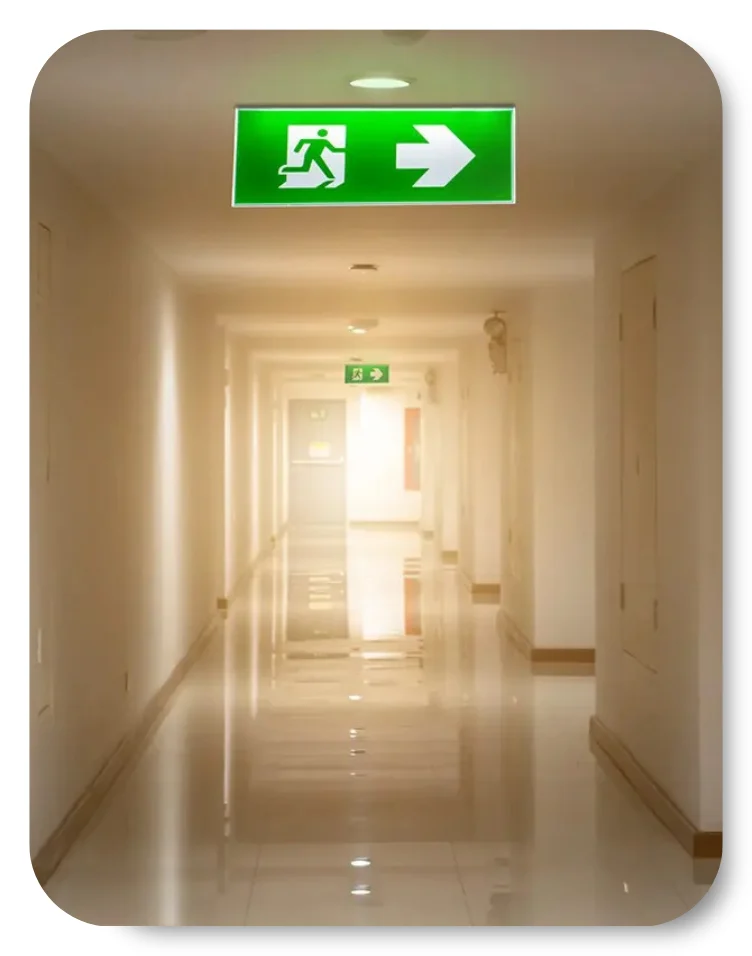
Every light testedEmergency lights and exit signs
Emergency lighting certificate cost in London
Fixed prices by the number of emergency lights and exit signs. All prices are plus VAT.
| Number of lights | ResidentialHomes, flats and HMOs | CommercialShops, offices and common parts |
|---|---|---|
| Up to 3 lights | £59 | £79 |
| Up to 6 lights | £79 | £99 |
| Up to 12 lights | £129 | £149 |
| 13 lights or more | Written quote | Written quote |
Count every emergency light and illuminated exit sign in the building.
Every price includes
- An inspection and test of every emergency light and exit sign
- Checks on charge indicators, test switches and fittings
- A check for gaps in escape route coverage
- A certificate listing every light and its result
- A fault list with the fix each fault needs
- Your certificate emailed within 48 hours
What can change the price
Who needs emergency lighting certification?
The law requires working emergency lighting where escape routes need it. A certificate is how you prove it is maintained.
Legal duty
Businesses and workplaces
The Fire Safety Order 2005 requires escape routes and exits that need lighting to have emergency lighting of adequate intensity, and the responsible person must keep it maintained in efficient working order.
Often required
HMOs
Councils judge HMO fire safety using the LACORS guide. Emergency lighting is usually needed on the escape route in taller HMOs, or where the route has no natural light or is long and complex. Your licence conditions and HMO fire risk assessment will say if you need it.
Common parts
Blocks of flats and managing agents
Shared stairs, corridors and lobbies fall under the Fire Safety Order, and BS 5266-1:2025 covers common access routes in blocks of flats. Your fire risk assessment will check that the latest certificate is on file.
Rarely needed
Houses let to one household
BS 5266-1 does not apply to private homes, so a house let to a single household rarely needs emergency lighting. Working smoke and carbon monoxide alarms are the main duty there, backed by a fire alarm certificate.
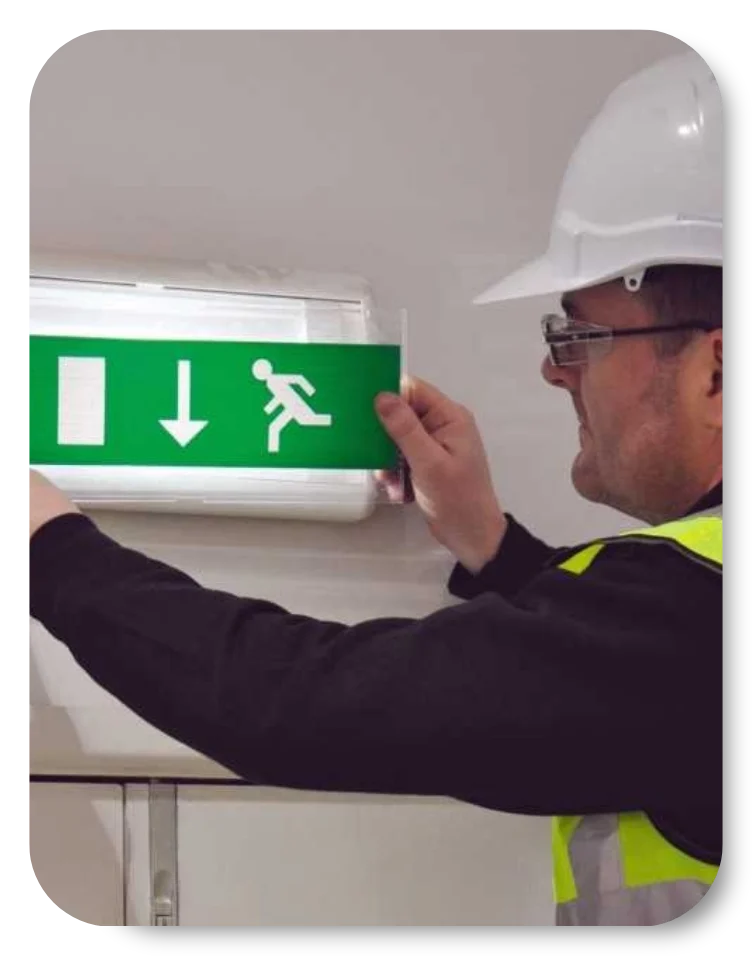
NICEIC and NAPITRegistered engineers
What our engineer checks
Every emergency light and exit sign in the building is inspected and tested against BS 5266-1.
Every light switches to battery
Each light and exit sign is tested with the mains supply cut, to confirm it lights straight away.
Charge indicators and test switches
We check the charging light on each fitting and that the test key switches work.
Condition of every fitting
Cracked diffusers, faded exit signs and loose or dirty fittings are noted.
Escape route coverage
We look for gaps at exits, stairs, changes of direction, fire alarm call points and fire extinguishers.
Central battery panels
Where fitted, the panel, its indications and the battery bank are checked.
Your log book
We record the results in your log book where you have one, so every test is on file.
How often should emergency lighting be tested?
BS 5266-1 and BS EN 50172:2024 set a routine for every building with emergency lighting. Each test and its result should be written in a log book.
Every monthResponsible person
A short functional test. Switch each light to battery for a moment and check that it lights.
Every yearCompetent engineer
A test for the full rated duration of the lights, usually 3 hours, with a new certificate issued.
Every dayCentral battery systems
A quick look at the panel to confirm it shows the system is healthy.
3 hrDuration
Needed where people sleep, such as HMOs and hotels, or where the building is used again as soon as the power returns.
1 hrMinimum
Only where everyone leaves as soon as the power fails and the building stays empty until the batteries have recharged.
After a full-duration test the batteries need up to 24 hours to recharge, so the test is best done when the building is quiet. Self-test fittings to BS EN 62034 run these tests on their own, but the results still need checking and recording.
Which emergency lighting certificate do you need?
BS 5266-1 uses a different certificate for each stage of a system’s life. This page covers existing systems.
Completion certificate
For a new system, issued once it has been installed, tested and handed over.
From FRA LondonWith emergency lighting installation
Periodic inspection and test certificate
For an existing system, issued after the yearly inspection and test. This is what most people mean by an emergency lighting certificate.
From FRA LondonFrom £59 + VAT
Modification certificate
Issued after changes to a system, such as lights added, moved or replaced.
From FRA LondonQuoted with the work
Types of emergency lighting we test
Your certificate records the type of system in the building, because each one is tested slightly differently.
How the lights work
MaintainedOn all the time, and stays on from its battery when the power fails. Common for exit signs in shops, gyms and venues.
Non-maintainedOff in normal use and lights only when the mains fails. The usual type on stairs, in corridors and in HMOs.
CombinedAlso called sustained. Two lamps in one fitting: one runs from the mains, the other from the battery in a power cut.
How they are powered
Self-containedEach fitting has its own battery and charger. Found in most homes, HMOs and small businesses.
Central batteryOne battery bank feeds every light through fire-resistant cabling. Found in larger buildings.
Self-testFittings that run their own monthly and yearly tests to BS EN 62034 and flag faults.
How it works
1
Book online or by phone
Choose residential or commercial and tell us roughly how many emergency lights you have.
2
Engineer visit
An engineer inspects and tests every emergency light and exit sign.
3
Results on the day
Before leaving, the engineer explains anything that failed and what it needs.
4
Certificate in 48 hours
Your certificate and fault list are emailed within 48 hours of the visit.
If a light fails
Each fault is listed with the fix it needs. A faulty fitting can be replaced from £110 per light, supplied and fitted, and lights can be added where coverage is missing from £129 per light. Remedial work is quoted before we start, and the certificate is issued once the system passes.
Need a certificate for a licence, an assessor or your insurer?
From £59 + VAT, with your certificate emailed within 48 hours.
Why landlords and businesses choose FRA London
Fire safety is all we do
We carry out fire risk assessments across London every week, so we know what assessors, councils and insurers look for on a certificate.
NICEIC and NAPIT registered
Tests are carried out by engineers working under NICEIC and NAPIT registration.
Fixed prices on this page
Prices for up to 12 lights are listed on this page, plus VAT. Larger systems are quoted in writing first.
One team for every certificate
Fire risk assessments, fire alarms, emergency lighting and extinguishers, booked through one point of contact.
Emergency lighting certificates across London
Our engineers cover all of Greater London from our office on Upper Street, Islington.
Central LondonWestminster, Camden and the CityView areaNorth LondonIslington, Haringey and BarnetView areaEast LondonHackney, Tower Hamlets and NewhamView areaSouth LondonLambeth, Southwark and CroydonView areaWest LondonEaling, Hammersmith and KensingtonView area
Boroughs we cover include
BarnetBrentBromleyCamdenCroydonEalingEnfieldGreenwichHackneyHammersmith and FulhamHaringeyHarrowHounslowIslingtonKensington and ChelseaLambethLewishamNewhamSouthwarkTower HamletsWandsworthWestminster
Emergency lighting certificate FAQs
Can’t see your question? Call 020 4634 6089 or email info@fralondon.co.uk.
How much does an emergency lighting certificate cost in London?
For a home, flat or HMO it costs £59 for up to 3 lights, £79 for up to 6 and £129 for up to 12. For commercial premises it costs £79, £99 and £149 for the same bands. All prices are plus VAT. Buildings with 13 or more lights are quoted in writing before you book.
Is an emergency lighting certificate a legal requirement?
No law names the certificate itself. The Fire Safety Order 2005 requires emergency lighting on escape routes that need it, and requires the responsible person to keep it maintained in efficient working order. A certificate from a competent engineer is the usual proof, and fire risk assessors, councils and insurers ask to see it.
How long is an emergency lighting certificate valid for?
The law does not set an expiry date. BS 5266-1 recommends a full inspection and test every 12 months, so most buildings get a new certificate each year, with short monthly tests recorded in the log book in between.
How often should emergency lighting be tested?
Every month the responsible person should carry out a short functional test of each light. Every year a competent engineer should test the lights for their full rated duration, usually 3 hours. Central battery systems should also have their panel checked daily. Record every test in the log book.
Who can issue an emergency lighting certificate?
A competent person, meaning someone with the training and experience to inspect and test emergency lighting to BS 5266-1. Our engineers work under NICEIC and NAPIT registration. The fire brigade does not issue emergency lighting certificates.
Do HMOs need emergency lighting?
It depends on the building. Councils use the LACORS fire safety guide, which usually asks for emergency lighting on the escape route in taller HMOs, or where the route has no natural light or is long and complex. Your HMO licence conditions and fire risk assessment will say whether you need it.
What happens if an emergency light fails the test?
The engineer explains each fault on the day and lists it on the report with the fix needed. A faulty fitting can be replaced from £110 per light, supplied and fitted. Any remedial work is quoted before we start, and the certificate is issued once the system passes.
What is the difference between maintained and non-maintained emergency lighting?
Maintained lights are on all the time and stay on from their battery when the power fails, which suits exit signs in shops and venues. Non-maintained lights stay off in normal use and only come on when the mains fails, which is the usual type on stairs and in corridors.
How quickly will I get my certificate?
Your certificate and fault list are emailed within 48 hours of the visit.
Which areas of London do you cover?
We cover all of Greater London, with engineers working from our office at 32-33 Upper Street, Islington, N1 0PN. Visits in central London may include parking and congestion charges.
MU
Page reviewed by
M Umar Iqbal, Operations Manager at FRA London
Umar is responsible for the quality of our emergency lighting testing and certification work. He spent seven years as a Gas Safe and electrical engineer in building compliance, is registered as an electrical approved contractor, and is a trained fire risk assessor who has worked alongside our assessors on inspections across London for more than two years.
Electrical approved contractorFire risk assessor trainedGas Safe and electrical engineer
What our customers say
Book your emergency lighting certificate
From £59 + VAT. Every light tested, with your certificate emailed within 48 hours.
Last updated: November 2026