









At FRA London, we provide trusted, fully insured fire safety services for homes and businesses across London. Our qualified team offers independent, cost-effective solutions tailored to your property, ensuring full compliance and complete peace of mind.
Rated 4.9 on GoogleFrom 105 customer reviews
NICEIC and NAPIT registeredQualified, approved engineers
Installed to BS 5839Certificates issued at handover
Fully insuredHomes, HMOs and businesses
Fire alarm installation cost in London
Clear prices, published before the survey.
Smoke or heat detector
Per detector, supplied, fitted and tested
£129
Fire alarm panel installation
Larger and addressable systems are quoted after a free survey
£1,299
Every price includes
- Equipment, materials and labour
- System design for your property
- Installation by our engineers
- Testing before we leave
What changes the price
Building sizeNumber of devicesSystem typeCategory or gradeCable routes and accessCentral London parking and congestion charges

Who needs a fire alarm system?
Businesses and commercial premises
The Fire Safety Order 2005 requires fire detection and warning that suits the premises. Your fire risk assessment sets the category we design to.
Landlords and rented homes
In England, the smoke and carbon monoxide alarm rules require a smoke alarm on every storey used as living accommodation, plus a carbon monoxide alarm in rooms with a fixed combustion appliance other than a gas cooker.
HMOs and converted flats
Councils often expect a panel system in the common parts with linked alarms in each letting. We check your licence conditions before we design anything.
Types of fire alarm system we install
The right system depends on the size of the building, how it is used and what your fire risk assessment calls for.
Conventional
The building is split into zones wired back to the panel, which shows the zone that triggered.
Best for: smaller shops, offices and HMOs
Addressable
Every device has its own address, so the panel shows the exact detector and its location.
Best for: larger and multi-storey buildings
Wireless
Devices talk to the panel by radio, so very little cabling is needed.
Best for: listed and period buildings, and premises that stay open during the work
Aspirating smoke detection
Pipework draws air to a central detector that senses smoke at very low levels. VESDA is the best known brand.
Best for: server rooms, data centres and high ceilings
Interlinked smoke and heat alarms
Mains-powered alarms linked so that all of them sound together.
Best for: houses, flats and smaller rented homes
Not sure which system you need?
We survey the property free of charge and recommend the right one.
Panel systems can be connected to an alarm receiving centre through Redcare or DualCom signalling. For older buildings, read our guide to wired and wireless fire alarms in period properties.
Fire alarm categories under BS 5839-1
The code of practice for non-domestic premises describes systems by category. Yours comes from the fire risk assessment.
MManual
Call points and soundersA manual system with no automatic detection.
L1Life
The whole buildingAutomatic detection throughout. The highest level of life protection.
L2Life
L3 plus high-risk roomsEverything in L3, with detection added in specified high-risk rooms.
L3Life
Escape routes and adjoining roomsDetection on escape routes and in the rooms that open onto them.
L4Life
Escape routes onlyDetection in corridors, stairways and other circulation areas.
L5Life
Specific areasDetection placed to meet a defined fire safety objective.
P1Property
The whole buildingDetection throughout, designed to protect property.
P2Property
High-risk partsDetection in defined high-risk parts of the building.
Fire alarm grades for homes, rentals and HMOs
BS 5839-6 covers houses, flats and HMOs. The grade is the type of equipment. The LD category is how much of the home is covered.
Grade: the equipment
Grade ADetectors, sounders and call points wired to a control panel
Grade CDetectors and sounders connected to central control equipment
Grade D1Mains-powered alarms with a sealed standby battery
Grade D2Mains-powered alarms with a replaceable standby battery
Grade F1Battery-powered alarms with a sealed battery
Grade F2Battery-powered alarms with a replaceable battery
LD category: the coverage
LD1Escape routes and every room where a fire could start
LD2Escape routes plus high-risk rooms such as the living room and kitchen
LD3Escape routes only, such as halls and landings
Rented homes: BS 5839-6:2019 recommends Grade D1 alarms with LD2 coverage. Larger HMOs often need a Grade A system in the common parts.
Our fire alarm installation process
1
Free survey and design
We visit, review your fire risk assessment and design the layout of detectors, call points, sounders and panel.
2
Installation
Our engineers fit the cabling or wireless devices, working around your opening hours or tenants where possible.
3
Commissioning
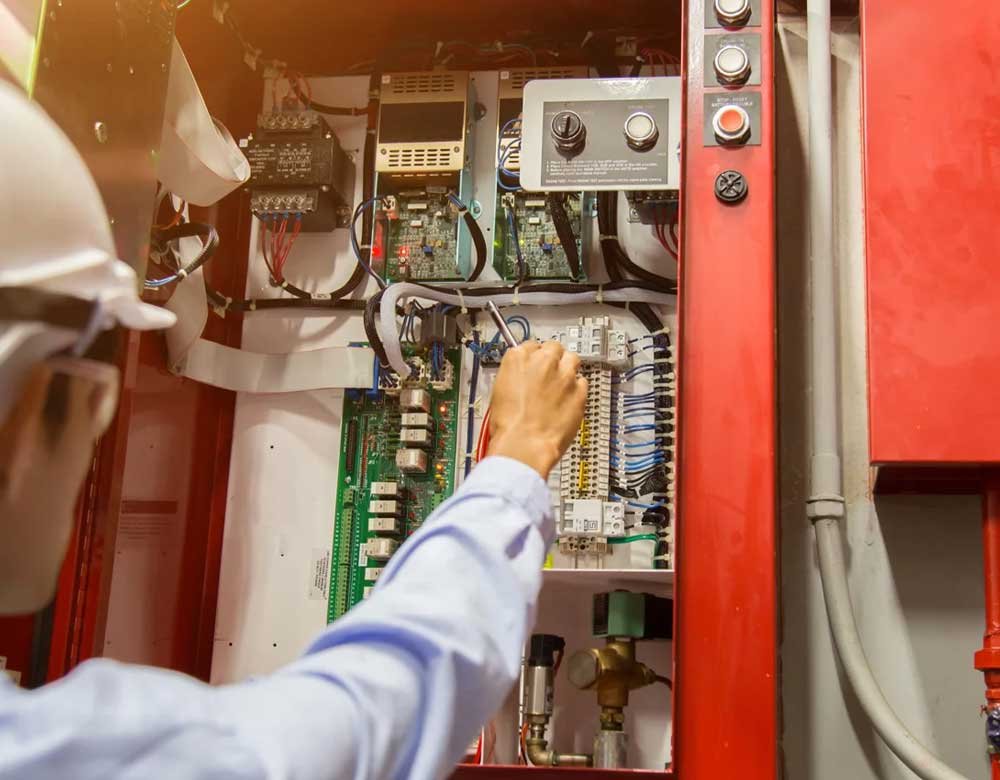
Every device is tested, sound levels are checked and the panel is programmed with clear zone descriptions.
4
Handover and certificates
We show you how to use and test the system, then hand over your certificates, log book and zone plan.
Testing and servicing after installation
A fire alarm only protects people if it is kept working. BS 5839-1 sets out two routines.
Every weekTest a manual call point, a different one each time, and record it in the log book.
Every 6 monthsA competent person inspects and services the system, at least this often.
Related services
Why choose FRA London for fire alarm installation?
Fire safety is all we do
We carry out fire risk assessments across London every week, so we design alarm systems from the same findings a fire officer checks them against.
NICEIC and NAPIT registered
Your system is installed by engineers working under NICEIC and NAPIT registration.
Prices published up front
Detector and panel prices are on this page. Anything larger is quoted in writing after a free survey.
One team for the whole job
Risk assessment, alarms, emergency lighting, extinguishers and certificates, with one point of contact.
Fire alarm installers across London
Our engineers cover Greater London from our office on Upper Street, Islington.
Fire alarm installation FAQs
How much does fire alarm installation cost in London?
A smoke or heat detector supplied and fitted costs £129. A fire alarm panel installation costs £1,299. Larger, addressable and wireless systems are priced after a free survey, because the cost depends on the size of the building, the number of devices and the category your fire risk assessment calls for.
How long does fire alarm installation take?
Fitting a few detectors in a house or flat is usually done in one visit. A panel system for a shop, office or HMO usually takes between one day and several days, depending on the number of devices and how the cables need to run. Your quote gives the expected duration.
Do landlords need a fire alarm in a rented property?
Yes. In England, landlords must fit a smoke alarm on every storey used as living accommodation and a carbon monoxide alarm in any room with a fixed combustion appliance other than a gas cooker. BS 5839-6:2019 recommends Grade D1 mains-powered, interlinked alarms with LD2 coverage for rented homes.
What fire alarm does an HMO need?
It depends on the size and layout of the property and on your council. Smaller shared houses are often fitted with Grade D1 interlinked alarms to LD2 coverage. Larger HMOs commonly need a Grade A system with a control panel and call points. We check the requirement against your licence conditions before quoting.
Is a wired or wireless fire alarm better?
Both can meet BS 5839. Wired systems suit new builds and refurbishments where cables can be run easily. Wireless systems avoid most cabling, which makes them a good fit for listed and period buildings and for premises that need to stay open during the work. Before drilling or chasing into ceilings and walls in a pre-2000 building, check for asbestos with a survey first.
How often should a fire alarm be tested and serviced?
BS 5839-1 recommends a weekly test by the person responsible for the building, operating a different manual call point each week, and a service by a competent person at least every six months.
What certificates do I receive after installation?
For a panel system installed to BS 5839-1 you receive certificates covering design, installation and commissioning, together with a log book and zone plan. For alarms fitted in a home to BS 5839-6 you receive an installation and commissioning certificate.
Do I need a fire risk assessment before installing a fire alarm?
For a workplace, a block of flats or an HMO, yes. The fire risk assessment decides whether a fire alarm is needed and which category it should be. If you do not have a current one, we can carry out the fire risk assessment first and design the alarm system from its findings.
What our customers say
Last updated: October 2026