

At FRA London, we provide trusted, fully insured fire safety services for homes and businesses across London. Our qualified team offers independent, cost-effective solutions tailored to your property, ensuring full compliance and complete peace of mind.
Legionella Risk Assessment for Dental Practices London
Ensure your dental clinic meets all HSE and HTM 04-01 standards with our professional Legionella risk assessment services. We help London dental practices prevent waterborne bacteria, protect patients and staff, and maintain full regulatory compliance. Stay safe, compliant, and confident with our expert Legionella testing and monitoring solutions.

Expert Legionella Risk Assessment Services for Dental Practices in London
FRA London specifically designed legionella risk assessment services for dental practices. Our legionella risk assessment services are designed for every type of dental practice, whether you run or manage a dental surgery or clinic. A comprehensive understanding of Legionella risk assessment is important to know how water systems can pose hidden risks. Our specialist legionella risk assessment services are crucially designed for dental practices to recognize water hygiene demands. We focus on identifying the sources that can be the reason for the Legionella threat, along with providing accurate control measures.
What is Legionella?
Legionella is a genus of bacteria, and it specifically grows in Freshwater environments like lakes and streams. It grows naturally in such an environment. It can also grow in man-made water systems, and here is where the concern starts because it multiplies rapidly. It is particularly found in building water systems. If contaminated water droplets of these bacteria are consumed by a human, it can lead to a potential health risk. Comfort zone temperature of Legionella is cited around the range of 20 to 45 °C. It rapidly persists in complex pipe networks, and where branches are really used. Because it can also pose a risk to someone inhaling aerosols or droplets containing Legionella bacteria. That is why dental settings require regular legionella risk assessment for maintenance, safety of staff and patients, through temperature control and timely risk management measures.

Legionnaires’ Disease
It is a serious disease and a form of pneumonia. Legionnaires’ disease is caused by consuming contaminated water or inhaling water droplets that contain Legionella bacteria. This disease can affect any age person, but older patients are at higher risk. Symptoms of Legionnaires’ disease often develop after 2 to 10 days of Exposure. The affected person’s symptoms include high fever, fatigue, muscle pain, and shortness of breath. It can also develop confusion or gastrointestinal symptoms. Many cases are treated with the help of appropriate antibiotic treatment and medical support. Because aerosol-generating equipment is used in dental settings, prevention is essential for the protection of both patients and staff. Legionnaires’ disease doesn’t spread from person to person because its infection pathway is through the inhalation of contaminated droplets. Therefore, water environment control is the key to the prevention of the Legionella threat.

What Does a Legionella Risk Assessment Entail?
When a client engages with FRA London for Legionella risk assessment for their dental practice. Our index processor covers significant assessment steps. In London practice environments, our qualified dental water systems specialists start with a thorough site visit. During site visit hours, specialist inspectors examine every water supply usage pattern and other relevant systems for mapping the risk of Legionella. Our inspectors look for whole water supply systems, including hot and cold water systems, storage tanks, dental unit water pipe lines, and instrument processing water circuits. Our expert assessors evaluate dental settings and their day-to-day operation, like flushing regimes, temperature control, disinfection protocol, sterilizer loops, dental unit water treatment, and other records of maintenance. This determines sampling or testing. We also produce a written report which sets out all findings from concerned areas to suggestions for improvement actions, and a clear Action Plan with monitoring recommendations.
What’s Included in the Legionella Risk Assessment?
For dental practice in London, our legionella risk assessment services cover all specific key elements exactly according to the format suited for London-based clinics. Our qualified legionella risk Inspector inspects every water system, from dental unit water lines to hand-wash basins, sterilizer chilled water loops, instrument processing units, and all other general utility water outlets. They also performed sample testing for water or swabs for detecting lagoonal presence. After inspection, we provide a deliverable report that maps every risk finding, recommendation, improvement, guidance, and schedule review. We also provide a digital copy for the compliance records.

What Does the Legionella Risk Assessment Need to Cover?
Legionella risk assessment should be suitable, compliant, and sufficient. When it comes to dental practices operating in London, it means every water system needs to be assessed where patients, staff, and visitors come in contact with the aerosolized water. Legionella Risk assessment should also cover design, layout, flow patterns, stagnation, temperature control, biofilm, and maintenance history. Assessment should be conducted with the proper Action Plan. In London’s regulatory environment, every point must be clearly defined and documented for the dental practice premises.
All Water Systems Should Be Taken Into Consideration
In a dental practice environment in London, every water system must come under consideration. All water systems mean where water is supplied, stored, recirculated, used, aerosolized, or drained. Moreover, where patients and staff can come into contact with it. Because if water sits stagnant, it can be the reason for bacterial growth. It is common in London dental practice environments because of multiple treatment rooms and infrequently used surgery rooms. Comprehensive coverage is essential because one missing loop can provide an environment for Legionella growth.

What Do I Need to Demonstrate for Compliance?
For London-specific dental practice settings, it is essential to demonstrate compliance with legal standards and guidance. It’s necessary to show that inspection of Legionella is carried out suitably and sufficiently. Documentation is key and evidence of the safety and security of dental premises. Your procedure should also reflect that you are operating a dental practice, and every dental unit water line, instrument processing loops, spittoons, and hand wash basins are secure and covered. You also needed to demonstrate that your assessment is reviewed at suitable intervals, if any changes occur in layout and design. It means changing and modifications, Trigger review.
What is the L8 Approved Code of Practice? (ACOP)
In the UK health and safety law the Approved Code of Practice L8 (ACOP L8) is a key guidance for the control of the risk of legionella bacteria in water systems. The “Approved Code of Practice” itself shows that it’s a legal requirement. Although L8 is not dental specific, its principles are equally applied to the dental practice water systems. L8 also refers to HSG274 (technical guidance) and all other relevant regulatory standards. You need to demonstrate that you have applied every tap in a tailored way to your water systems. ACOP L8 provides you with a legal standard, and you are responsible for following the process.
NHS Or Private?
In London, whether it’s an NHS contracted dental practice, a private clinic, or a mixed model, Legionella risk assessment obligations are the same. For NHS practices, maybe there are some other additional governance or internal auditor requirements from the commissioning organizations. But a specific requirement for carrying out risk assessment is control measures and Record Keeping. In a private dental clinic, they may have flexibility in operating water systems, but it doesn’t mean it reduces their duty to protect patients, staff, and the public. In both cases, water systems can face specific challenges because of their older buildings, multiple floors, clinical and ancillary rooms, and less frequently used rooms. We focus on safety and reliable legionella risk assessment.
Proactive Measures for Legionella Control in Dentistry
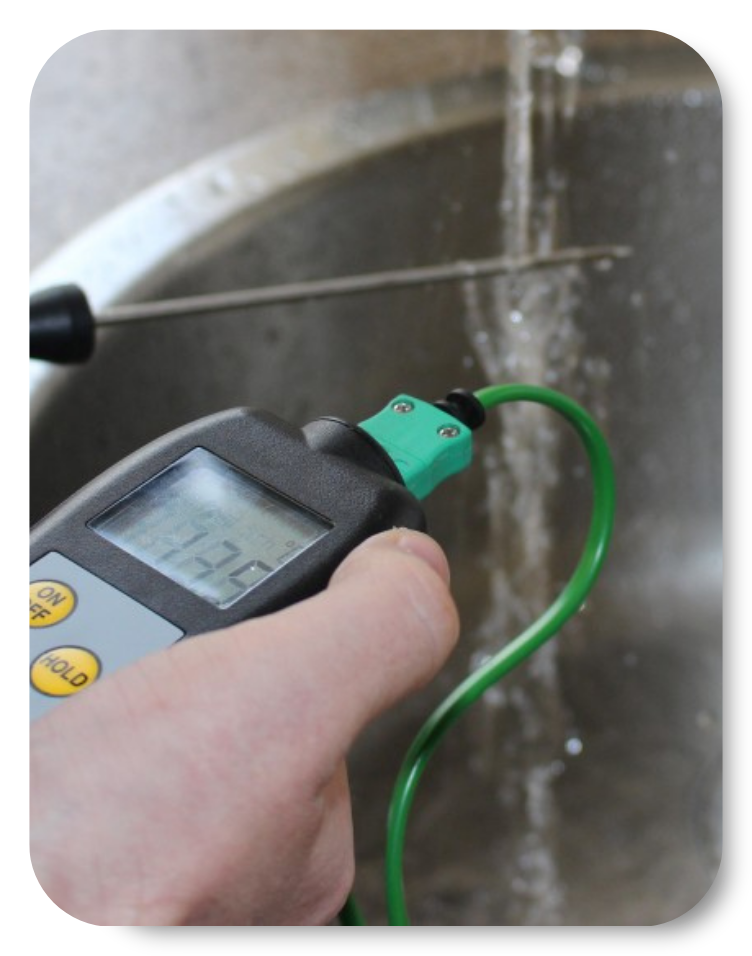
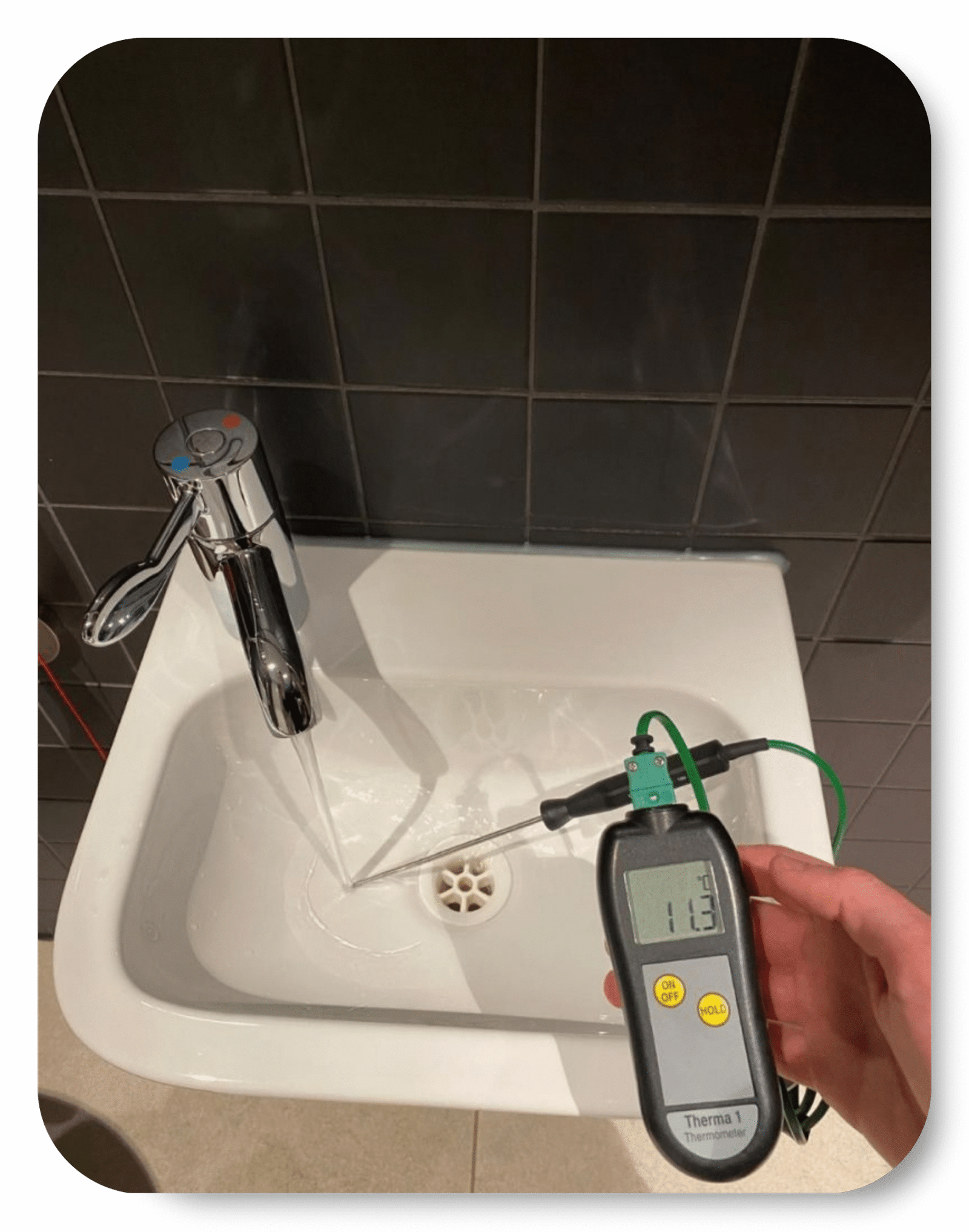
After the initial risk assessment dental practice in London should adopt ongoing proactive control measures for maintaining safety. Firstly, make sure that your water systems are maintained consistently. Check your hot water temperature to inhibit bacterial growth. It is also necessary to ensure that cold water is sufficiently cold and no water is left in loops or pipes for long periods. In a busy dental practice, sometimes we overlook seldom-used treatment rooms or utility areas. Schedule planning is crucial to flush those areas regularly. Monitoring is also a critical and vital part that includes temperature checks, flow checks, periodic water sampling, inspection of tanks, and inspection of sediment or corrosion. In the London practice context, you should balance clinical sessions and patient flow with maintenance Windows. Make sure staff are aware of their role in flushing, reporting unused rooms, and temperature checking.
Legionella Testing in London
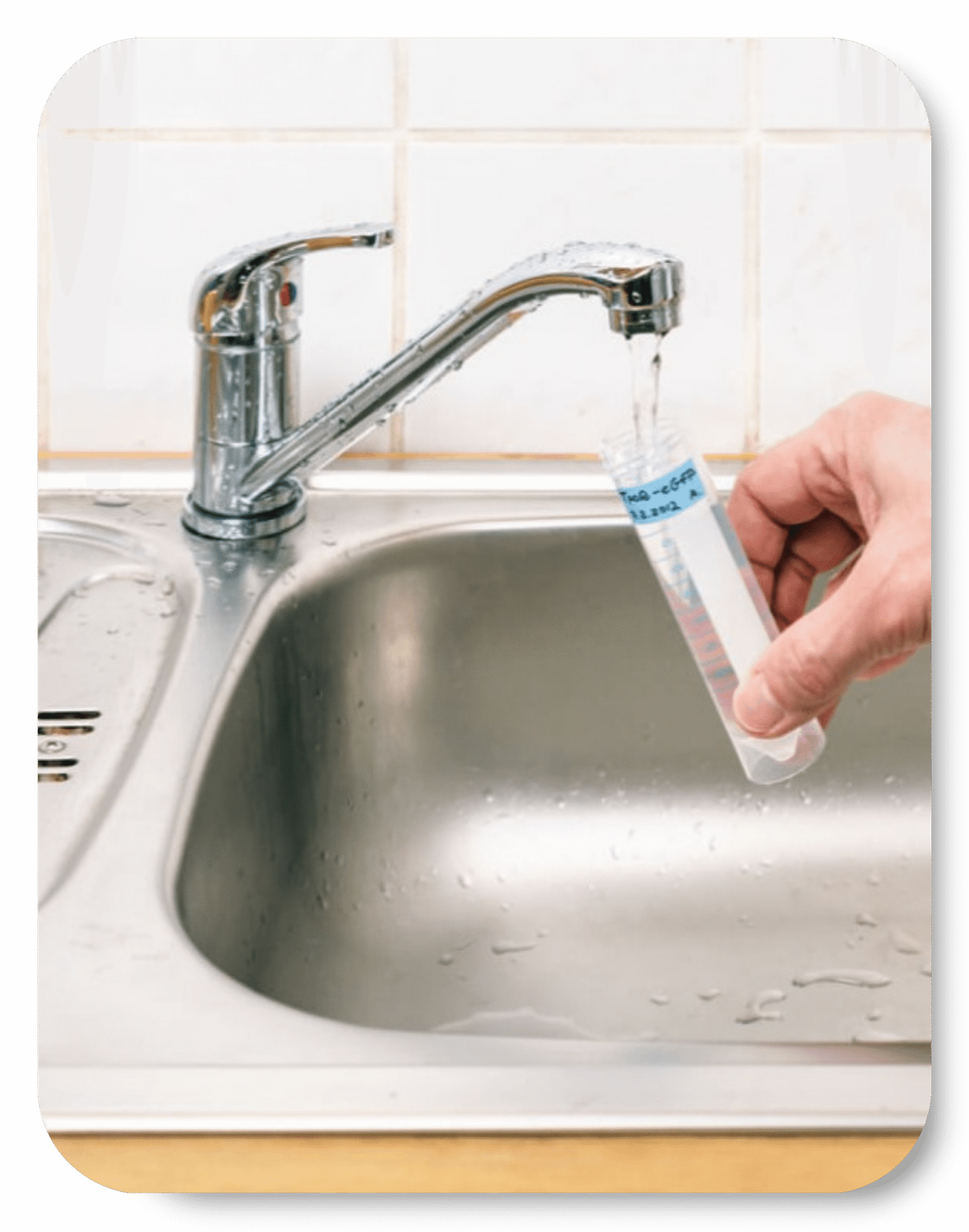
In London, specialized testing services for Legionella risk assessment are available for dental practices. It is essential to use a local services provider because they are familiar with the London regulations, building types, and water system practices. In the context of the dental practice environment of London, testing can include taking water samples or swabs from the designated outlets and an analysis from the UKAS-accredited laboratories. Local London’s best service provider, focused on faster Turner round Times, local knowledge of building from older Victorian buildings to multi-story practices and mixed-use properties. At FRA London, we offer flexible scheduling. After the initial assessment, we coordinate the sampling and provide a written report with findings. Our qualified legionella risk assessor covers all boroughs across London.
Why Choose Us for Legionella Risk Assessments?
Choosing a London-based Legionella risk assessment company is essential because they are well aware of the dental practice in London, local requirements, HSE laws, and all other regulatory obligations and industry standards. Choosing FRA London for your dental practice’s Legionella risk assessment means partnering with a reliable and compliant company. Our professionals understand every component of dental unit water lines, instrument processing loops, spittoons, and hand-wash basins. We also provide compliance digital documentation, along with ongoing support with clear recommendations for monitoring regimes into practice operations. Choosing us means sustainable water hygiene management, safety, and peace of mind.
London’s Independent Legionella Specialist
As a London independent service provider for Legionella risk assessment in dental practices, our focus is on providing a fresh and comprehensive approach. We are an independent service provider, which means that we are not tied to large multi-service bundles or up-selling necessary remedial works. Our company’s mission is to assess water systems, identifying risks and delivering clear, pragmatic recommendations. Our best team has in-depth local knowledge, and they know the particular requirements and plumbing challenges of properties from Central London to outer London.
Honest, Transparent and Independent Services
We are committed to honesty and transparency for providing Unbiased and focused Legionella risk assessment services. From the initial site visit to every step, we are committed to providing comprehensive services with clear communication. We focused on Clear communication and made sure that our client knows exactly what our services cover, the pricing structure, and the action plan. We don’t chase hidden costs. We have years of experience, and our potential clients are proof of our independent services. We focus on a straightforward procedure with an accurate and defined scope, with a clear report.
Competent Legionella Support Where It’s Needed
We don’t just provide single-visit risk assessment, our services focus on providing expert sports with a tailored legionella risk assessment to dental practices. After the report delivery, we are also available to provide follow-up questions to help interpret findings and integrate the monitoring program for staff duties. Our risk assessors are familiar with dental practice operations, and we focus on aligning recommendations according to the clinic schedule without disturbing patient flow. We also provide ongoing comprehensive support by providing clear recommendations for water hygiene management.



Accreditation, Certification & Competency
At FRA London, our Legionella risk assessment services are recognized by our accreditation and certifications for London dental practices. Our qualified team and Legionella risk assessors are trained to industry standards. We meet every UK regulation and provide easy-to-understand documentation that meets regulators, insurance, and Dental practice governance Expectations. We apply and follow the guidance of HSE‘s ACOP L8 and HSG274. Our testing partners have a UKAS-accredited laboratory status. Our focus is on providing satisfaction to clients with accurate risk assessments and recommendations. Our Legionella risk assessors have years of experience in serving in dental practices across London. We provide compliant services to every type, whether it’s an NHS-contracted practice, a private clinic, or both. Our main focus is reliable support and assessment.
Frequently Asked Questions (FAQs)
How long is a Legionella risk assessment valid?
Typically Legionella risk assessment validity period is around 2 years. But if any modifications or changes occur in your water systems, they require immediate Legionella risk assessment. However, dental premises are at higher risk because of instrument processing loops, seldom-used surgery rooms, water treatment variants and other significant factors, which is why they require frequent review.
How long will the legionella risk assessment take?
In London, in the context of dental practice, Legionella risk assessment usually takes 1 to 2 hours. It also depends on the number of surgery rooms, water systems from instrument processing loops to steriliser chilled water and Dental unit lines or other ancillary water points. After the assessment documentation stage has been performed. It means the total time span varies according to all these factors. The whole process may take one or two days. Our risk assessment is designed for minimising disruption to your patient’s schedule and is flexible according to the client’s demand.
Why do dental practices need a Legionella risk assessment?
Dental practice made a lazyonella risk assessment because of the combination of water systems, aerosolisation equipment like dental chairs, handpieces and spittoons. It is also essential due to the high patient flow and usage patterns, which fall under health and safety requirements, like other surgical settings. It is also a legal requirement under ACOP L8, which means it is essential to identify and assess risk from Legionella bacteria in water systems.
What happens after the legionella risk assessment is completed?
After assessment completion, you will receive a detailed report that outlines all findings from identifying the risks, to recommendations, control measures, monitoring plan and review schedule. The duty holder is responsible for implementing the recommended actions. For instance, the duty holder is responsible for flushing regimes to temperature checks, dental unit line treatment, Record Keeping, and replacement of problematic pipework.
Can I conduct a legionella risk assessment myself for my dental practice?
You can carry out a risk assessment yourself if you are competent and have enough knowledge. If you have an understanding of water hygiene, dental Unit water systems, aerosol generation, pipework design, temperature regimes and the regulatory framework. However, London dental practices have Complex systems, Patient Safety obligations and compliance standards. So, choosing a professional and experienced Legionella risk assessor will help you provide an accurate assessment with credible documentation.
Does My Dental Practice Require A Legionella Risk Assessment?
Yes, every dental practice that has water systems, serves patients and uses equipment and generates aerosols. You are legally responsible for Legionella risk assessment. Legal duty is equally implemented on all types of dental clinics, whether it’s NHS-contracted, private or both. Duty holders are responsible for fulfilling their duty without compromising on safety. No matter if the clinic is small or large, risk assessment is essential for reducing Legionella bacteria.
Are Dental Practices High Risk for Legionella?
They are not automatically at high risk like the cooling towers and large storage tanks. But dental practices are also at high risk because of high exposure, water hygiene challenges, dental unit water lines, hand wash basins, steriliser loops or because of other heavily used patterns and aerosol generation. These elements show that dental practices are at a higher risk than a simple office environment, that is why assessment is essential for protecting staff, patients or visitors from the risk of Legionella bacteria.
Where Does The Risk Come From?
In a dental practice, risk is everywhere water is stored, recirculated or sits in pipe work. The most common risk is temperature because the growth range of Legionella is typically around 20 to 45 °C. Aerosol production places like hand pieces, chairs, sinks, and spittoons are also at risk of legionella growth. Other creative factors like stagnant water, seldom-used rooms and clear pipework and a lack of flushing are also the main reasons for the risk of legionella bacteria. Accurate assessment helps protect against the threat of bacteria.
Does Your Dental Practice Need a Legionella Risk Assessment?
Absolutely, your dental practice needs a legionella risk assessment because your daily operations involve water, aerosols and patients. It is essential to ensure you identify and manage all potential Legionella risks in your dental practice. Because prevention is the key to protecting patients, staff and reputation and compliance status. Check for all essential elements for identifying Legionella bacteria threats. Call for professional help if you want a Legionella risk assessment or suspect any kind of risk. An expert will help in identifying the risk accurately.
Get Your Free Quote Today
FRA London offers free fire safety quotes. Our team conducts timely and accurate assessments to guarantee your property meets safety regulations.
Contact Form
Fill out our easy contact form for a quick answer. Please include your name, email, phone number, and brief requirements. Our team will address your fire safety issues quickly.
Contact Information
Phone: +44 20 46004470
Email: info@fralondon.co.uk
Address: 32-33 Upper St, London N1 0PN, UK