



At FRA London, we provide trusted, fully insured fire safety services for homes and businesses across London. Our qualified team offers independent, cost-effective solutions tailored to your property, ensuring full compliance and complete peace of mind.
Fire Risk Assessment for Communal Areas in London
A fire risk assessment is a detailed and thorough testing of buildings and various properties to identify hazards and potential fire attack risks in them. This organized review of properties not only legally authorizes owners and landlords to rent their shares but is also essential for protecting the lives of individuals. Shared living facilities like hostels and lodges, or communal areas such as alleys or staircases, are identified as high-risk places for fire attacks. Due to public involvement and a large number of occupants living and using them, it is highly important to guarantee their safety. The responsibility for a proper risk assessment is the duty of the owners, dealers, or house executives. Whether you rent out a block, shop, or even a portion, it is essential to properly observe specific hazards that can be the reason for a possible fire attack and fix them as early as possible.
Affordable Pricing
Prices may vary based on property location, congestion, and parking charges
Our Prices
Single Storey Communal – £119
Two Storey Communal – £169
Three Storey Communal – £199
Four Storey Communal – £249
What Is a Communal Area in Fire Risk Assessments?
Generally, a part or route of a property that is used by more than one resident or tenant is referred to as a communal area. Narrow passages, lobbies, stairs, and sometimes even corridors and elevators are specified as communal areas or publicly shared spaces. The reason behind these spaces being at high risk is that they are unrestricted and exposed than private areas. With constant exposure, a small mistake can start a diverse fire. For instance, a burning cigarette bud in a carpeted lobby is likely to set the whole building on fire. Fire assessments for such places are therefore very keen and focused and comprise proper inspection, mending, and testing as well. A thorough examination of these properties cannot only preserve the building value but, most importantly, save thousands of lives from going into a fatal disaster.
What Does a Fire Risk Assessment Cover?
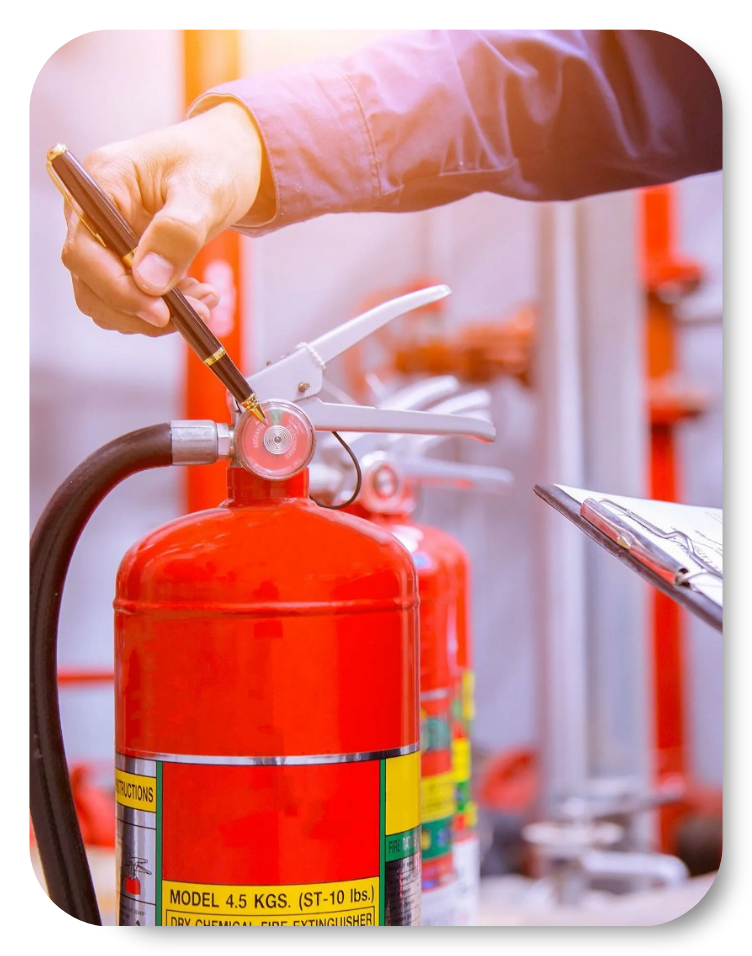
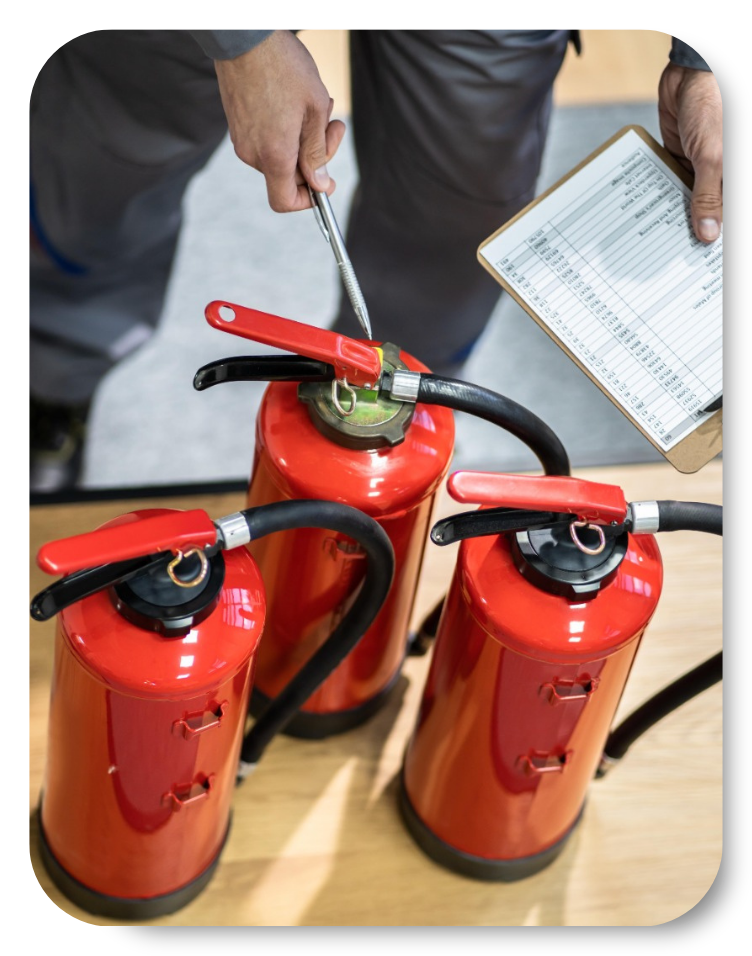
A guided fire risk evaluation covers every inch in these places. As the risk is twofold to threefold, the inspection of fire doors, escape doors, and even safety tools is included in the list. The checklist includes proper awareness through signage, working and upgraded emergency hoses and extinguishers, functional fire alarms and smoke detectors, and also obstacle-free escape routes.


When Is a Fire Risk Assessment Required for Communal?
For public facilities and narrow spaces, it is ideal to conduct a potential risk assessment every six months. But sometimes specific situations ask for a current report of a building’s safety. Under the Regulatory Reform (Fire Safety) Order 2005, it is legally required of landlords and owners to have their property tested and amended if any leaks or breakthroughs occur. Apart from this, an evaluation can be conducted after a building’s construction has just finished, or when renting properties to new tenants. Even when basic renovations like wiring or plumbing are done, it is advised to get their systems running examined and checked for hazards.
Who Is Responsible for Completing a Fire Risk Assessment?
It is a tenant’s responsibility to live by basic precautions. However, the legal requirement of providing a proper fire risk assessment report for the communal or residential area in question is that of the owner. The managing director should clarify and legally authorize the place as stated in the law for the Fire Safety Order 2005. A guided fire risk review is not as hard as it sounds. The managing agent, owner, or the property guardian can do an inspection by themselves or hire a professional fire associate. This competent person can keep a written and registered report of your property. With the completion of your property’s inspection, it is then categorized as safe or under development.


What Does a Fire Risk Assessor Look For?
When conducting a guided risk assessment for fire attacks, the fire risk assessors are trained to look into even the tiny details. They deeply focus on the features and functionality of elevators or lifts. It all starts with recognizing hazards like flammables in the hallways or trashing of cigarette buds or other substances. In addition to tenant behavior and building conditions, these assessors calculate the rate of fire spread, and its chances to go unnoticed if any such case happens.Not only this, but the management and framework of the building are reviewed as well. Whether or not a fire door is present, any blocked escape routes, or old safety equipment that needs to be replaced. These recordings are then authorized, and an amendment notice under the name of the building owner is issued.
What Is the Cost of a Fire Risk Assessment for Communal Areas?
Usually, prices for a structured fire risk assessment for communal areas start from a couple of hundred pounds. But the ranges may vary depending on your building type. The review of an average block with a typical flat layout costs less than that of a three-tier complex or a large mall. The price may also be affected by how often you need your property to be examined or how unique or complex your building is designed.


How Often Should Fire Risk Assessments Be Done?
Generally, the UK Fire Safety Law requires every property holder or owner to show up with a current and latest fire risk assessment report, but no exact time is specified in the text. For this, landlords can at least keep track of these fire risk reports yearly or half-yearly. In addition, your building layout, how frequently you remodel or repurpose it, and after new move-ins, an inspection is required.
What Happens If a Communal Area Doesn’t Have a Fire Risk Assessment?
Unfortunately, if any communal area in question doesn’t have a current review or a proper fire risk assessment at all, the consequences are not easy. The UK law strictly demands that landlords have guided risk evaluations for fires and their hazards; otherwise, legal and safety issues can both arise. Non-compliance with the Safety Order 2005 can result in penalties in the form of high charges or fines. Not only this, in case of serious complications like unauthorized fire casualties, the owner is held responsible for all the injuries and lives lost. At the end, property, people, and finances are all hacked, and the owner is the only person to be blamed.

5 Fire Regulations For Communal Hallways
The UK Fire Safety laws have listed regulations and precautionary measures that apply to communal areas in commercial as well as residential spaces. All hallways, public staircases, and corridors must be addressed and in compliance with these reforms. Basically, these are some general rulings like:
No Smoking
Smoking in a contained area is not only disliked but can be a potential trigger for casualties like fire attacks. Burnt cigarette buds, lighted matches, or slips of gas lighters never come with an announcement. Fire started from such sources is known to spread rapidly. Therefore, no smoking and prohibition of entry of matches and substances like this are to be followed strongly.
Storage
Personal storage at entrances and in hallways is strongly condemned. Prams, bicycles, or bikes can easily block escape routes and latch onto the doors. They can even cause fuel eruptions and can sometimes act as triggers for fires. So, clutter and stacking up in public spaces should be banned.
Smoke Alarms and Carbon Monoxide Detectors
Another primary regulation is to install proper smoke and carbon monoxide detectors. These regular safety patterns are crucial for ensuring risk detection, especially near boilers or fireplaces and their exits. For communal areas, it is important to get them fitted and reviewed by an expert. Legally, staying compliant with them and having them run is a duty on the landlord’s behalf.
Fire Doors
A building’s fire defence system must have fire doors. These are sturdy steel doors that are bolted tightly and designed to minimize the spread of fire when under attack. The fire is unable to pass through these metal barriers and is thus contained. A smoothly regulated fire door is commonly installed in corridors and must have a self-closing mechanism.
Fire Risk Assessment
A communal area’s safety is registered and categorized with a fire risk assessment, making it a crucial regulation that landlords must comply with. With orderly examination and repair of any possible cracks, tenants’ safety and a building’s compliance are both legally approved.
Who Is Responsible for Fire Safety Compliance?
Under the Fire Safety Order 2005, Regulatory Reform, the person to be questioned for maintenance and evaluation of fire risks and their assessments is typically the landlord or the managing director in some places. These responsible persons are the ones who need to be notified if chaos prevails or an uncertain fire incident takes place.
Key UK Fire Safety Legislation for Communal Areas
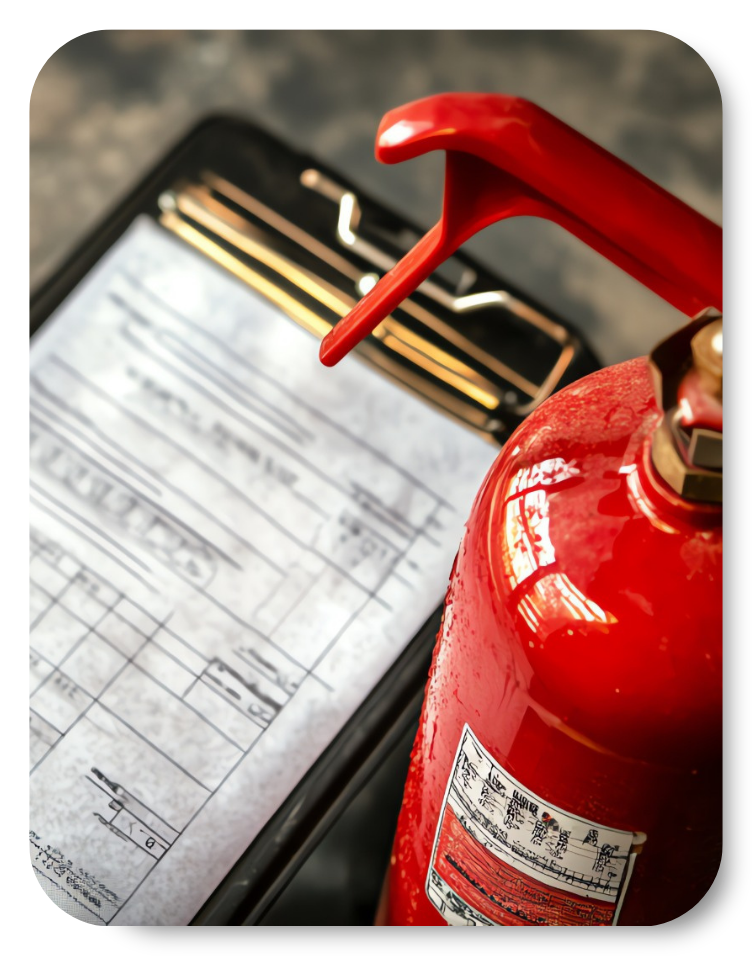
The UK’s Fire safety Legislation is most concerned about the risks of fire attacks in crowded communal places. This led to the formulation of the popular Fire Safety Order 2005, Regulatory Reforms that keep track of all the owners and require them to provide an overall evaluation report of hazards and their amendments in their properties. In addition to this, the new Fire Safety Act of 2021 is also in action, which further refines this evaluation process.
Fire Safety Order 2005
In the UK, the Fire Safety Order 2005 and its Regulatory Reforms are the major platform that applies to communal areas as well as residential plots. These reforms are valid in all domestic as well as non-domestic shared facilities, accounting for over 40% of fire precautions.
Fire Safety Act 2021
With this renewed policy, fire safety was no longer limited to inner spaces, but also extended to outdoor, and exit railings. From mainstream walls to balconies and even their attachments. Every nook was advised to be inspected to check the building’s viability.
Building Safety Act 2022
In the next year, the government announced the Building Safety Act 2022. This was more in line with buildings that were high in occupancy and rose 7 floors above the ground. This law forces building safety regulations that are in line with fire precautions and high-end building management.
Fire Safety (England) Regulations 2023
The major concern of the 2023 Safety regulations for fire entitled high-rise properties. The buildings that were almost over 11 or 18 meters tall were advised to strengthen their fire defence systems. With working equipment and purposeful strategies for the safety of the civilians.
What Are the General Fire Safety Requirements for Landlords?
Landlords in England are legally required to keep the fire safety requirements of their buildings and other properties that fall in communal areas neat. For this, owners should have a current and updated fire risk review at hand. Moreover, their building’s safety equipment must be legally registered, effective, and running. Having multiple functional smoke or CO detectors installed orderly, if they own high-occupancy buildings.

Additional Requirements for Buildings Over 11 Metres in Height
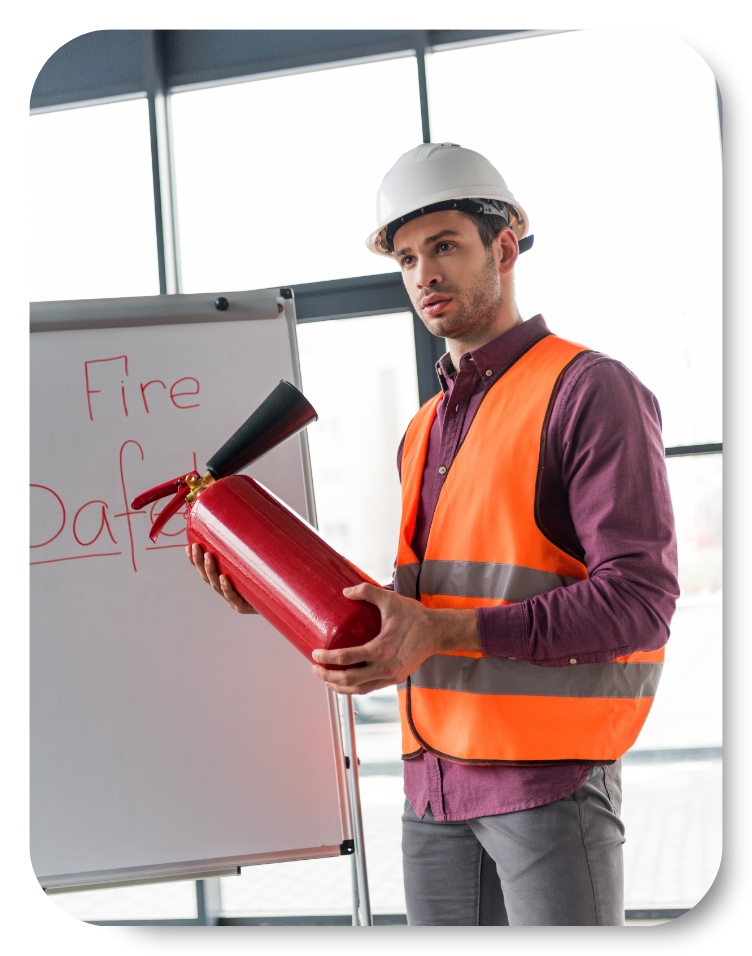
Buildings that are almost 11 meters above the ground are categorized as mid-rise buildings. These properties have specified compliance regulations because there is an increased risk of evacuation in them. Firefighters also need to use a strategic approach when these buildings are involved in the scenario. For these buildings, tenants must be well-aware and profound; fire doors are a must, and a safety kit for every floor is a necessity.

Fire Safety in High-Rise Residential Buildings (18 m+)
Multi-occupancy or high-end residential buildings, with more than 7 floors, usually require a keen and detail-oriented fire risk assessment. These buildings are more or less 18 meters in height, and the proper installation of every fire safety equipment is a must. The evacuation plans, signage, and even the tools needed to control and manage fire incidents in these buildings are ten times more potent. This height is measured from the ground level to the penthouse, noting the structure and durability of the complex. Failure to comply can result in strict legal notices and heavy fines.
Best Practices for Managing Fire Safety in Communal Areas
Fire risk assessment alone is not enough to ensure the safety of the tenants. Managing their protection and danger of these hazards is a collective process that is done by frequent checking for potential triggers, legal documentation, and authorization with the fire personnel, and even resident awareness shares a vote. All these precautionary measures combined make a building a true safe zone and, explicitly, a peaceful environment for the public to enjoy.






Accreditation, Certification & Competency
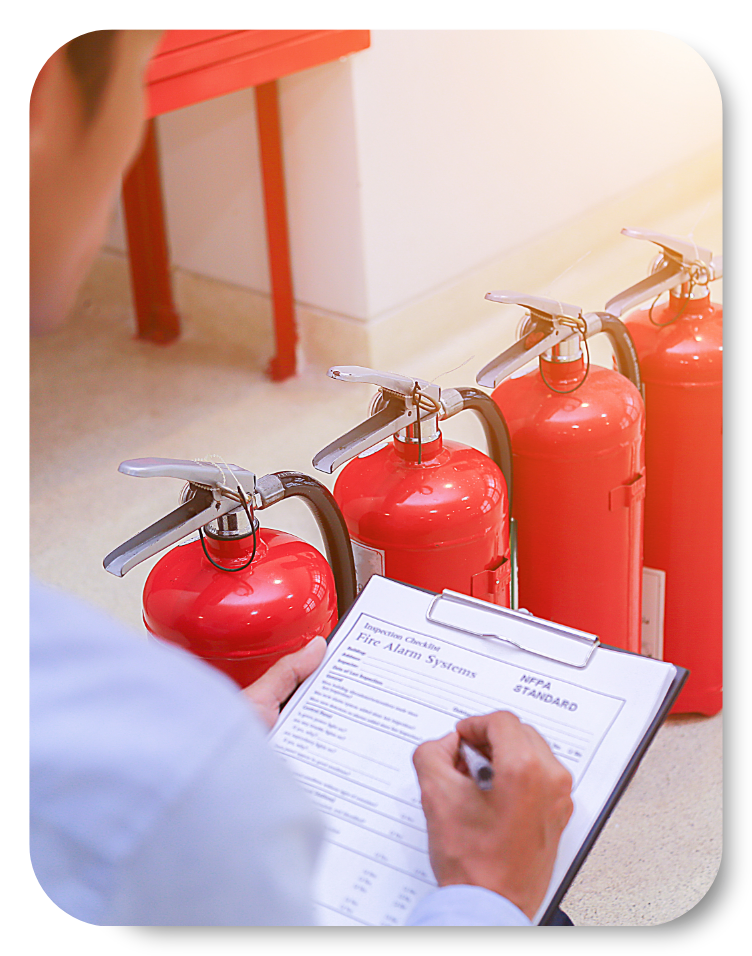
All of our engineers and inspectors are fully trained and certified by recognised industry bodies, including City & Guilds, NEBOSH, EAL, NAPIT, IFSM, and UK Fire Door Training. We strictly adhere to current British Standards and fire safety legislation to ensure that all our services meet official compliance requirements. Ongoing professional development and up-to-date training are central to our team’s commitment, giving you confidence that your property is in the hands of qualified professionals with deep expertise in fire safety regulations.
Frequently Asked Questions (FAQs)
Are fire extinguishers required in communal areas?
For vast and openly exposed communal areas, this is not always advised. But in residential areas, having a fire extinguisher at hand can save the day.
Who is legally responsible for carrying out the fire risk assessment?
The government calls out the “responsible person” to question the fire risk assessment. As the owner or the managing agent, they can hire a professional assessor for the evaluation.
How often should fire risk assessments be reviewed?
This duty comes with no fixed timeframe, but the owner can decide with an annual or a bi-annual plan of risk assessment depending upon their building sizes, and its occupancy.
Are communal areas covered by the Fire Safety Order 2005?
Yes, the Regulatory reforms of the Fire Safety Order are focused on shared spaces like stairs, halls, and even elevators. This act specifies all non-domestic areas in a communal place.
What if I fail to comply with these regulations?
If you fail to comply with the Fire Safety Laws, the result can be heavy fines, notice periods, or even confinement of your buildings if severe non-compliance is shown.
Client Testimonials
Free Resources and Compliance Tools
Get Your Free Quote Today
FRA London offers free fire safety quotes. Our team conducts timely and accurate assessments to guarantee your property meets safety regulations.
Contact Form
Fill out our easy contact form for a quick answer. Please include your name, email, phone number, and brief requirements. Our team will address your fire safety issues quickly.
Contact Information
Phone: +44 20 4634 6089
Email: info@fralondon.co.uk
Address: 32-33 Upper St, London N1 0PN, UK