


If you manage a shop, office, warehouse, restaurant, clinic, or mixed-use commercial site, fire safety cannot be treated as a box-ticking exercise. In England and Wales, most non-domestic premises fall under the Regulatory Reform (Fire Safety) Order 2005. That law places fire safety duties on the “responsible person” and requires suitable fire precautions based on risk.
Many business owners search for fire safety certificate requirements for commercial buildings because they want a simple answer. In practice, compliance is built around a proper fire risk assessment, documented findings, working fire protection measures, staff information and training, and a clear emergency plan. There is not one universal fire safety certificate that automatically covers every commercial building in every situation. Instead, you need evidence that your premises meet the relevant legal duties.
This blog explores the main legal points, the practical steps you need to take, and a clear commercial fire safety compliance checklist you can follow.
Understand Who Is Responsible For Fire Safety
The first step is knowing who holds the legal duty. Under UK workplace fire safety guidance, the responsible person is usually the employer if the premises are a workplace. It can also be the owner, landlord, occupier, or anyone with control over part of the premises. In shared buildings, more than one person may have fire safety responsibilities.
This matters because the law does not simply ask whether a building has alarms or extinguishers. It asks whether the responsible person has identified risks, put suitable precautions in place, and maintained them properly. If the business occupies the building, the business may carry duties even when a landlord also has responsibilities for common parts or structural features.
For many readers, this is the starting point for understanding the fire certificate legal requirements business owners must follow. Compliance begins with responsibility, not paperwork.
Start With a Fire Risk Assessment
A fire risk assessment is the foundation of commercial fire safety compliance. As per the guidelines, the responsible person must carry out a fire risk assessment of the premises and review it regularly. The government’s five-step approach is clear: identify fire hazards, identify people at risk, evaluate and reduce the risk, record findings and prepare an emergency plan, then review and update the assessment.
This is also the point where many businesses ask how to get a fire safety certificate. In reality, the route to compliance usually starts with a competent fire risk assessment. That assessment tells you what precautions are needed in your building and what evidence you need to keep. For simple premises, some responsible persons may complete the assessment themselves if they are competent. For many commercial sites, a qualified assessor is the safer choice.
A good assessment should reflect the actual use of the building. A retail unit does not carry the same fire profile as a warehouse, and a multi-floor office does not present the same evacuation issues as a small single-storey shop. That is why the assessment should be tailored, not generic.
Follow a Practical Commercial Fire Safety Compliance Checklist
A reliable commercial fire safety compliance checklist should focus on the legal duties that most often affect day-to-day business operations.
-
Check That a Fire Risk Assessment Is In Place
Make sure the assessment is suitable, current, and specific to the building. It should not be an old template copied from another site. If the premises, occupancy, layout, or use have changed, the assessment should be reviewed and updated.
-
Confirm Fire Detection and Alarm Measures
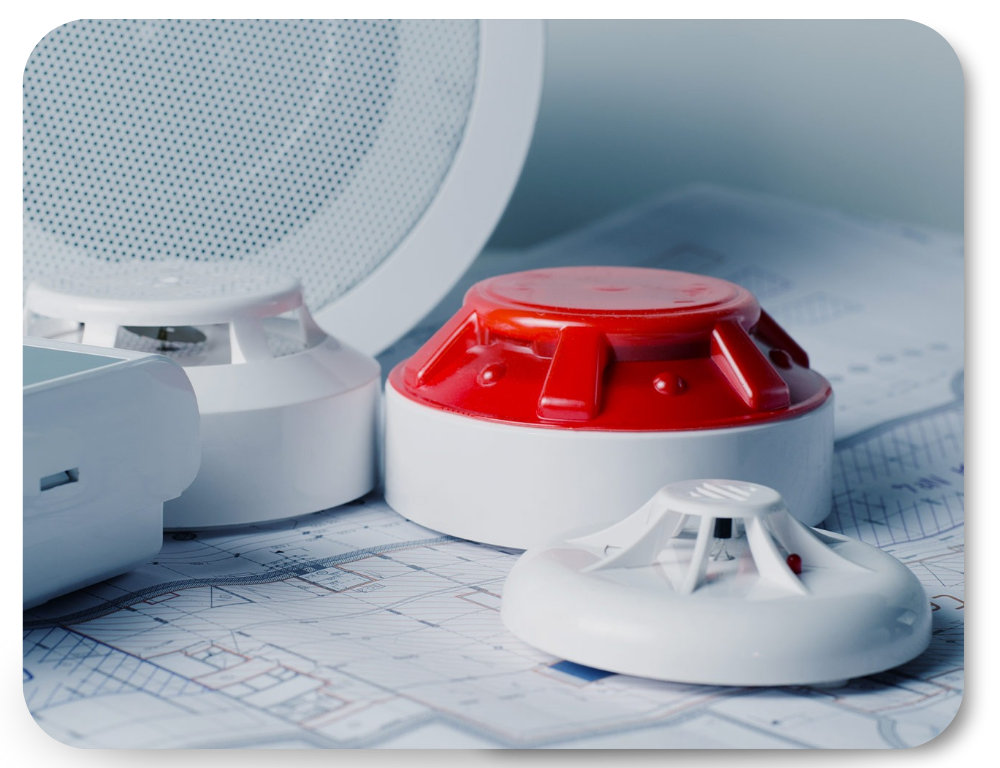
The Fire Safety Order requires appropriate fire-fighting and fire detection arrangements where necessary. In practice, this means your fire alarm system should be suitable for the building and maintained properly. If your site has alarm certification requirements, keep that documentation together with the wider fire safety records.
-
Review Escape Routes and Emergency Exits
The UK guidance states that fire safety and evacuation plans should include clear passageways to escape routes, clearly marked escape routes, and routes that are as short and direct as possible. Emergency exits must work in practice, not just on paper. That means routes should be unobstructed, doors should function as intended, and signage should support safe evacuation.
-
Maintain Fire-Fighting Equipment
Appropriate equipment, such as extinguishers, must be provided where needed and kept in working order. If extinguishers are part of your safety setup, servicing and certification records should be retained. Maintenance is part of compliance, not an optional extra.
-
Check Emergency Lighting Where Required
Where people need safe visibility during evacuation, emergency lighting may be necessary. If it is part of your fire strategy, installation, testing, and certification should be documented properly. This is particularly important in larger premises, stairwells, internal corridors, and sites where lighting failure would affect safe escape.
-
Train Staff and Prepare an Emergency Plan
The UK guidance says that the responsible person must tell staff about the risks identified, plan for an emergency, and provide staff information, instruction, and training. This is a core part of workplace fire safety regulations that UK businesses need to follow. Staff should know what to do, where to go, and how to respond if the alarm sounds.
Understand What Businesses Usually Mean By “Fire Safety Certificate”
This phrase causes confusion. Under the Fire Safety Order, compliance is not based on one universal certificate for all commercial premises. Fire certification under the older Fire Precautions Act was replaced by the current risk-based regime. That means businesses now show compliance through the risk assessment, the measures in place, and supporting records such as maintenance logs, alarm documentation, extinguisher records, emergency lighting documents, and training records.
So when someone asks how to get a fire safety certificate, the practical answer is usually this: arrange a competent fire risk assessment, complete the recommended actions, maintain the relevant systems, and keep the right documentation. Depending on the property and services installed, that may include a fire alarm certificate, fire extinguisher certificate, emergency lighting certificate, or other service-specific records. The exact documents depend on what is installed and what the risk assessment identifies as necessary.
That is the clearest way to understand the fire certificate legal requirements business owners are trying to meet. It is less about a single paper and more about complete, defensible compliance.
Keep Documentation Organised and Easy To Produce
A well-managed building should have its fire safety information organised and accessible. If an enforcing authority, insurer, landlord, or client asks for evidence, you should be able to show your current fire risk assessment, emergency plan, maintenance records, and relevant certificates without delay. Good record keeping also makes annual reviews and service scheduling much easier.
This is also where many businesses fall behind. They may have arranged services, but the paperwork is spread across emails, service visits, and different contractors. A clearer system reduces that risk and supports smoother compliance over time.
Review Fire Safety Regularly, Not Just Once
Fire safety is not a one-off project. Fire risk assessments must be reviewed regularly and updated when needed. Changes to staffing, layout, storage, equipment, business activities, or tenancy arrangements can all affect the fire risk profile of a building.
That is especially important in commercial buildings where growth often changes the use of space. A site that was safe for ten staff may need different controls when it has thirty. A storeroom converted into an active workspace may change evacuation needs. Regular review is how businesses stay aligned with workplace fire safety regulations in the UK, rather than drifting out of compliance without noticing.
Conclusion
If you want a simple answer to fire safety certificate requirements for commercial buildings, this is it: start with a proper fire risk assessment, act on the findings, maintain your systems, train your staff, and keep the right records. That is what compliance looks like under the current legal framework.
For most businesses, the goal is not just to avoid enforcement. It is to protect people, keep the building safer, and make sure the business can show clear evidence of compliance when asked. A structured commercial fire safety compliance checklist makes it that much easier.
Need Help With Fire Safety Compliance For Your Commercial Building?
At FRA London, we provide trusted fire safety support for businesses and property owners across London. Our qualified team carries out Fire Risk Assessments, supports broader Fire Safety Services, and helps clients with service-specific documentation such as Fire Safety Certificate, Fire Alarm Certificate, Fire Extinguisher Certificate, and Emergency Lighting Certificate, where relevant to their premises and systems.
We also offer Fire Door Installation, Fire Door Inspection, Fire Door Survey, Fire Extinguisher Servicing, and Emergency Lighting Installation, helping businesses build a more complete fire safety strategy under one roof. FRA London’s team highlights its registrations and recognised training across bodies, including IFSM, NAPIT, EAL Recognised, NEBOSH, UK Fire Door Training, and City & Guilds, reflecting a strong focus on competence and regulatory compliance.
If you need help understanding how to get a fire safety certificate, arranging a commercial fire risk assessment, or checking whether your site meets current legal expectations, FRA London can help you take the next step with clear, practical support.